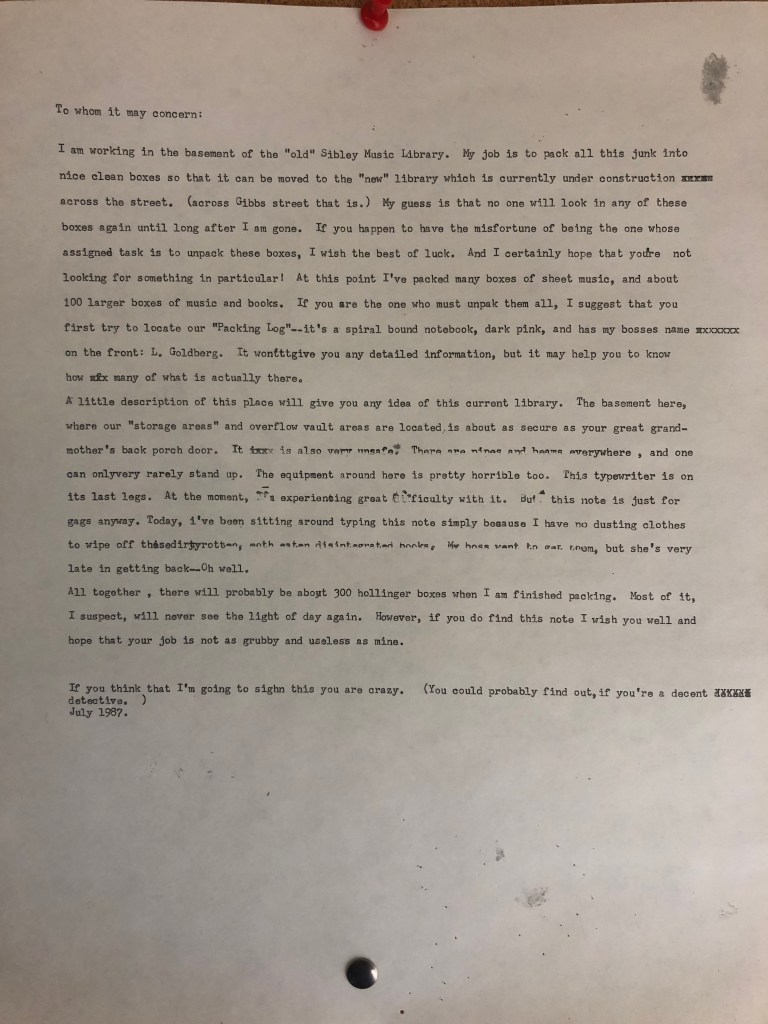
Through my (music) student years, I worked at the Sibley Music Library. It might be too late to study for a library science degree now.Otherwise, I would love to work there. One of the best kept “secrets” is a note left by a former student worker. It a secret, only because the note is posted in a room without public access, and those who can get into the room probably don’t care about it. I had a chance to sneak in this room the other day, and snagged a picture of it.
To whom it may concern:
I am working in the basement of the “old” Sibley Music Library. My job is to pack all this junk into nice clean boxes so that it can be moved to the “new” library which is currently under construction xxxxx across the street. (across Gibbs street that is.) My guess is that no one will look in any of these boxes again until long after I am gone. If you happen to have the misfortune of being the one whose assigned task is to unpack these boxes, I wish the best of luck. And I certainly hope that you’re not looking for something in particular! At this point I’ve packed many boxes of sheet music, and about 100 larger boxes of music and books. If you are the one who must unpack them all, I suggest that you first try to locate our “packing Log”—it’s a spiral bound notebook, dark pink, and has my bosses name xxxxxxx on the front: L. Goldberg. It won’t give you any detailed information, but it may help you to know how xxx many of what is actually there.
A little description of this place will give you any idea of this current library. The basement here, where our “storage areas” and overflow vault areas are located is about as secure as your great grandmother’s back porch door. It xxxx is also very unsafe. There are pipes and beams everywhere, and one can only very rarely stand up. The equipment around here is pretty horrible too. This typewriter is on its last legs. At the moment, it’s experiencing great difficulty with it. This note is just for gags anyway. Today, I’ve been sitting around typing this note simply because I have no dusting clothes to wipe off thesedirtyrotten, moth eaten disintegrated books. My boss want to get them, but she’s very late in getting –Oh well.
All together, there will probably be about 300 hollinger boxes when I am finished packing. Most of it, I suspect, will never see the light of day again. However, if you do find this note I wish you well and hope that your job is not as grubby and useless as mine.
If you think that I’m going to sign this you are crazy. (You could probably find out, if you’re a decent detective.)
In the world of equal temperament, the extra-musical meaning associated with a key is an hommage to a composer, isn’t it?
(Pianist friends, please educate me if you have thoughts on this)
I have always been drawn to “sweet” music, and slowly over time, I have realized that quite a few of my favorite pieces are in the key of D-flat major. Is D-flat major supposed to be sweet?
After organizing these sweet D-flat major pieces in chronological order, it seems like this trend was started by Chopin. Liszt and Chopin were friends, Debussy studied with a student of Chopin, and Nazareth worshipped Chopin. I can’t help but think that after Chopin, all D-flat major pieces are an hommage to him. Yes, it’s just my simple-minded speculation. You can challenge it.
“Raindrop”, from Prelude, Op. 28 (composed between 1835-39) by Chopin
Nocturne, Op. 27, #2 (composed 1836, published 1837) by Chopin
Funeral March, 3rd Movement from Sonata No.2 (published 1840) by Chopin
Berceuse, Op. 57 (published 1844) by Chopin
“Un Sospiro”, from Three Concert Etudes S.144 (composed 1845-49) by Liszt
Minuet Waltz (composed in 1847) by Chopin
Nocturne (1892) by Debussy
Largo, 2nd movement from the New World Symphony (composed 1893) by Dvorak
Dora (ca. 1900) by Ernesto Nazareth
Clair de Lune, from the 3rd movement Suite bergamasque (1905) by Debussy
Been indoors all day rehearsing. As I got home and the sun was still out, I couldn’t help and went for a bike ride. Not only was it too cold, but at some point, tears started dropping for no reason and I couldn’t open my eyes. Air was too chill? Staring straight at the sun? I wasn’t emotionally ready to cry the rest of the way home, but I did. Some strange force wants me to be sad. My body? My heart? You? The Universe?
The guitar has always been my true love, and although I have been having an affair with the mandolin in the past few years, I just can’t help myself and fell in love with the Portugues guitar. As I was busying looking for the method, A Complete Method for Portuguese Guitarra by Havelock on the interweb (anyone has a copy to share?), a short biography of the late romantic English guitarist, Ernest Shand, just pop out of nowhere – he was introduced in Strings, A Fiddler’s Magazine (October, 1895), as Shand has just been “appointed an examiner of the Guild of Violinists.” I like this bio a lot. It describes a young Shand while he was still alive. It mentioned about how he learned the instrument, pieces he studied, and his score collection, and his notable performances. He was also still writing his method.
GUITARISTS, at least those who can really be called such, may be counted on the fingers of one hand, and amongst contemporary artists, the subject of our sketch must surely take a high place as a performer and teacher of a beautiful instrument now rarely heard in our concert rooms.
I say heard advisedly, because the guitar as now played by the majority of students, principally young ladies, is treated as hardly anything more than a toy, as in most cases a few chords, as a rule tonic and dominant, are relegated to it as an accompaniment to an easy song.
Mr. Ernest Shand who was born in Hull on January 31st, 1868, us a guitarist of no mean order. At an early age he studied the violin, but discontinued it after six years of practice. In 1886 he adopted the stage as his profession, and it was during that period that he first took up the guitar. His father taught him the rudiments of the instrument, but beyond that he has never had a master; perseverance and assiduous practice have been the only ones.
Having previously studied harmony and laid down a method of practicing, he devoted four hours a day to the instruments, his profession occupying nearly all the rest of his time. Like many amateurs he tried to begin at the end instead of the beginning, and having found in a music shop Aguado’s Rondos, op. 1 (3 sonatas, about the most difficult compositions ever written for the guitar), yet not knowing at that time that anything easier was to be had, he determined to master these beautiful, but difficult compositions.
His thirst for more music grew apace, and finding that Messrs. Schott and Co. published a list, he soon added these to his store, thus extending his knowledge of the capabilities of the instrument.
About this time he met Mme. Pratten, and it was by her advice that he studied more closely tone and expression; for hitherto execution had been his sole aim.
Mr. Shand has studied the works of Giuliani, Aguado, Sor, Regondi, and all the classical masters, and advises every student of the guitar, who would play it as an instrument and not a toy, to do likewise. He has a large collection of music for the guitar, including Giuliani’s three concertos for guitar and string quartette, or piano, which are now out of print. He has composed a large number of compositions for the guitar, eleven of which will shortly be issued by Messrs. Schott and Co. His first “air varie,” and arrangement of “Songe d’amour,” are published by Messrs. Schott and Bosworth, respectively.
Mr. Shand is now writing a method for the guitar on entirely new lines for beginners, which he believes will be of very great help in removing those obstacles so formidable to young students.
He has played in public at the Winter Gardens, Buxton; Pavilion, Southport; and the Siciety of Artists’, Birmingham. The Birmingham Post, of May 27th, 1895, said:- “He is an artist who exhibits remarkable skill in his solos.”
Mr. Shand has just been appointed an examiner of the Guild of Violinists.
Made some long drives over the weekend with my buddy Mike, and as the driver, he also had full control of what we listened to. He showed me a live reggae show that he enjoys: Rockpalast Live 2019 by Richie Spice and the Element Band. While I loved how tight the band and the arrangement was, my biggest question was: did Richie Spice know about “the lick” too?
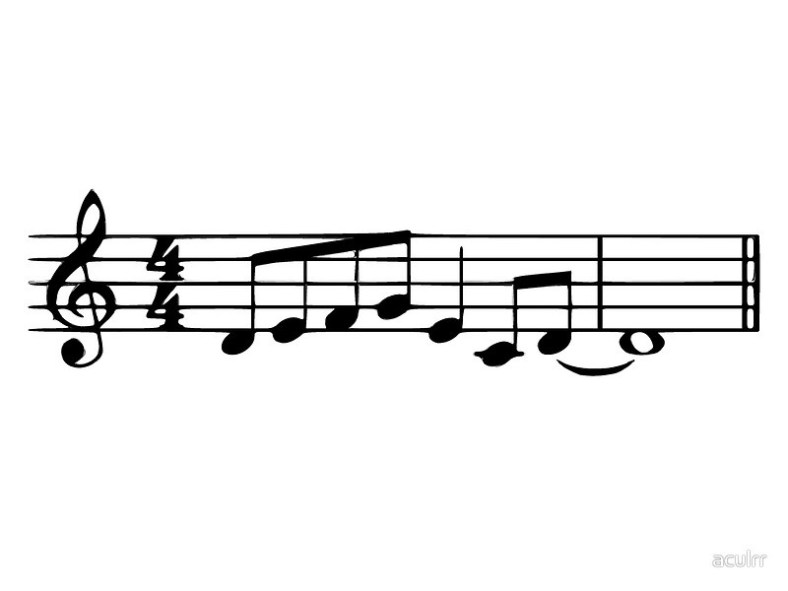
In my undergraduate years, the famous (or infamous) video of the lick came out. That’s where I learn about the very cool song Baby Come Back by the Players. In music, “a lick” is a short melodic idea. There is much discussion on the differences between a lick and a riff on the interweb. I don’t have a conclusive answer but it seems to be a consensus that a lick is usually used in passing in a solo (such as Chick Cirea’s solo in Spain (right at 6:11-12), whereas a riff tends to be a recognizable part of a song (like the melodic hook you think of when I say Smoke on the Water)
“The lick” is a particular melodic idea that is so commonly used by (mainly jazz) musicians, to the point that someone could make a (fun) video out of it. And ever since I have watched the video, I can’t help but notice it whenever “the lick” is being used. I have even joined The Lick Facebook page and contributed a few times of my own discovery from listening.
Santana’s Oye Como Va is a famous song that used “the lick” prominently as the main part of the composition. So is that the lick being used as a riff?
Back to the first question: I doubt Richie Spice knows about the lick. It’s probably his good musical sense that helped him hear and develop this little melody that “expands the same tone” with a nice contour: ascends by steps, descends by two skips, but over shoot, so that it ascends back up by step, which happens to bring the melody back to the open note. You can here Richie Spice used “the lick” as an ad-lib vocal filler in between lyrics to full effect.
My favorite “discovery” of the lick usage is of course from the classical guitar literature: measure 54-55 of Cancion, the third movement of Suite Venezolana by Venezuelan composer Antonio Lauro:
I know it’s a stretch, and Lauro probably didn’t know “the lick”, but I can’t help it!
It must just be a self-romanticized thought, but I have always felt an indirect connection between Jamaican and Hong Kong – both were British colonies, and both are islands with extremely hot and humid weather. Yes the connections are superficial, but for a Chinese teenager to make a reggae connection, that was more than enough.
Of course, before I knew it, Chinese immigrants in Jamaica actually had much to do with propelling Jamaican music and culture.
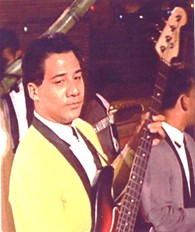
Let’s start with Byron Lee, who was from Kowloon, Hong Kong. Kowloon is a peninsula attached to the Mainland China, but it’s part of Hong Kong’s territory. Although saying one is from “Kowloon, Hong Kong” strikes me as a bit odd (it’s like telling someone you are from Pittsford, Rochester), but if he did move to Jamaica when he was 8 to 9 years old (as Wikipedia says), that means he must speak Cantonese? Anyhow, I wonder how “playing Chinese” actually helped his career – his band was called Byron Lee and the Dragonaires, with a debut single in 1959 is called “Dumplins“. His music does not sound Chinese at all, but we can learn and sound like them. Give us a job, and we will deliver. Just listen to the music with your eyes closed? And I have only learned this years later: Byron Lee and the Dragonaire appeared in the first James Bond movie, Dr. No. Pretty cool?
As usual, let me digress to an anecdote. When I was attending IU, I was really into scratching and DJing. Not having the money and space, I befriended a few fellow buusiness majors who DJ on the weekends and carried gears for them. I remember one early morning, after packing and cleaning up for a party, we sat down on a couch and watched VH1. A music vdeo of 2 Live Crew’s Me So Horny came up, and suddenly, one of my DJ friends yelled: “what the F is this fat Chinese dude doing?” Little did we know, one of the MCs of 2 Live Crew, Fresh Kid Ice, was of Asian descent. And guess what? Although he was born in Trindad and Tobago, his family was from Hong Kong. I didn’t confront my friend at the time, as I assumed he menat no disrespect, but why can’t Chinese people be an MC? I must thank him though, as that might have pushed me to learn music that is not of “my culture.”
Byron Lee and the Dragonaires.
During the pandemic, I found out about Stephen Cheng when I tried to learn more about Chinese-Jamaican musical connection. Born in Shanghai in 1923 (or 1921?), Cheng moved to Hawaii in 1948, then moved to New York and attended Columbia, and then studied singing at Juilliard. Being able to sing in multiple languages got him a gig in Trindad and Tobago, and when he visited Jamaica, he recorded Always Together – an odd rendition of a “Taiwanese folk song” Girl from Ali Shan, sung in Chinese operatic style, but backed with a rocksteady beat provided none other than Byron Lee. The song is now a cult reggae classic, but apparently Cheng had a rough musical career, being suspected as a spy.
(Where do I find the tape where he sang Yesterday????)
From RoboCop (2014). Early on in the movie, a guitarist tried out his newly installed robot-arms. He was playing the Adagio from the Concierto de Aranjuez, by Joaquín Rodrigo. Apparently, the robot-arms don’t work if emotions are evoked. But how does one play without emotions?
Listening to Leo Brouwer’s arrangement of the Adagio (second movement) of the Concierto de Aranjuez (from the collaborative album Leo Brower Con Irakere), I was reminded of two arrangements of the same piece performed by jazz musicians: Concierto de Aranjuez (Adagio) by Miles Davis (on his album, Sketches of Spain, arranged by Gil Evans); and Spain by Chick Corea. In my junior (or sophomore?) year, I played a non-degree recital, and put together a quartet of friends – a bassist, a pianist, a percussionist, and myself – to play Spain. We basically did the Chick Corea version: began with the Adagio as an introduction, then launched into the main part of the song.
Of course, I would have to include the effortless performance by Paco de Lucía. Unlike all the other recordings, Paco de Lucía performed the complete concerto (not just the Adagio), and apparently learned the whole piece by ear.
And there are two versions I would like to mention that are not on the Wikipedia list: the first one is by the Brazilian guitarist Dilermando Reis. On top of playing a steel string guitar, Reis took a “Liberace” approach and shortened the movement to merely four minutes. Contemporary guitarist Don Ross also played the Adagio on a steel string guitar, but in addition, he had Carlo Domeniconi turning pages, and gave a “finger style treatment” to the cadenza!
Back in the day (90s and early 2000s), students in Hong Kong had to do two public exams: the HKCEE and HKALE. They were the type of exams that could determine one’s life, as the results would count toward university application. I took my HKCEE in 2000, and having achieved a big task (without knowing my results yet), I asked my mom to buy me a fender.
We went to Tom Lee, and the sales could have handed me any guitar and I would have said yes. I was mostly trying Fenders (Gibson seemed a lot more expensive somehow), and ended up with a strat. Not just a regular strat. It is an “American double fat strat” with two double humbuckers (so is it still a strat?). I knew nothing about guitars (I still don’t), but I knew I should get an American one. Mr. Sales Guy mentioned “jazz” (do people play jazz on strat? what did I know about jazz then?), and rhythm guitar. I might have checked out some Jackson and PRS too, but… Fender!
It was a busy day, and at one point Mr. Sales Guy had to step away, as Eason Chan was there and needed his help. There was a moment Eason was next to me. We were both waiting for the Mr. Sales guy to return. Eason was friendly, and we had the most useless conversation. “Are you buying a guitar?? He asked, in his bright orange Hawaiian shirt and straw hat (I remember seeing him in the same outfit in the newspaper next morning). “Yes!” I replied. He was a budding singer at the time, not like what he is now.
I bought my Fender around year 2000, at an equivalent of USD $800. It was a lot of money, especially for a spoiled 17 year-old. I can’t thank my mother enough. At the time, I thought I would play that guitar a lot to make up for how much it’s worth. I still play this guitar today, and it’s my main axe. It’s the electric guitar I feel the most comfortable playing.
Visited the Bop Shop the other day, and thought I would spend some time to dig through the classical guitar and “world” sections. It turned out I did not check any classical guitar records at all, because there were already too many cool “world” records I would like to buy. Of the 4 records I purchased (out of 9 that I picked out originally), I was most enthused by this one – who can say no to a jazz record by Leo Brower (sic)?
I spent some time googling around to confirm there isn’t a musician with such a similar name to the maestro. Perhaps it’s a clever publicity trick for a musician to make some quick money? There’s gotta be something I don’t understand here…
It’s not the first time I saw the maestro’s name mispelled. And speaking of mispelling, I was one lucky bidder of the beautiful Casiotone CT 701 many years ago. I got this keyboard a lot cheaper than its usual price, because the seller mislabelled “701” as “710” on Ebay. I still have the keyboard (as one friend puts it, never sell any gear you own), and hope to use it in my future synth band.
Back to the album – everything aside from the misspelling is terrific – the lineup, musical selections, and arrangements. There are some classical guitar music being rearranged into a band format (such as Canario, Danza Caracaterística, La Catedral) , but this album from 1978 is just otherworldly. Every piece evolves unexpectedly, and I can’t really explain too much. Here is a documentary, with footages of the concert (this album must be the complete recording). Brouwer was shredding on Aranjuez, and conducting with his guitar in hand!
Giulio Regondi did not leave us a guitar method. Just for fun, I looked a bit at his New Method for the Concertina and Rudimenti del Concertinista, hoping it might give hint of his musical insights. Maybe even an explanation of why a guitar virtuoso picked up the concertina?
The preface of the New Method for the Concertina tells us a few advantages of the concertina: “chords of 8 notes are easy” and the “florid counterpoint in two or three parts”. As a keyboard instrument, florid counterpoint is expected, but how big of a chord did he want to play? Let’s look at the some diatonic scale harmonization:
Rudimenti, p.23
And a harmonization of the chromatic scale:
Rudimenti, p.24
Would Regondi have included these rule of the octave exercises had he written a guitar treatise?
An important feature of the concertina is the layout of the notes:
Method, p.3
As shown above, one would alternate between two hands to play a scale – downward stems are played by the left hand, and upward stems by the right. This “divides between the two hands the work which on other instruments must be done by one hand, hence the capability of the Concertina for rapid execution, for extended intervals and for the endless combinations of three, four and more simultaneous parts.”
Back to Regondi’s method – after the preface, and paragraphs on how to hold the instrument and producing good tone, the method mentions: “… the peculiar charm of the Concertina is sweetness, delicacy, and flexibility of expression…” What would Regondi have said about the guitar?
A good portion of the method then gets into scale and short harmonic progressions in each major and minor key, not unlike a standard guitar method:
Method, p.5
The next section discusses enharmonic keys on a concertina, which produces pretty graphics like this one:
Method, p.9
Like many 19th century guitar methods, Regondi’s concertina method devoted a section into the studies of thirds, sixths, octaves, and tenths. The stem directions make these exercises pretty for the eyes, but chaotic for the player:
Method, p.13
The same goes for exercises in contrary motion:
Method, p.18-19
What about a page full of contrary motion exercises?
Rudimenti, p.20
Following the mechanical exercises are etudes that work on sustained note, clarity of voices, ornaments, and staccato. The section on bellow management is interesting, as Regondi explains changing the bellow at the right time is analogous to singers taking breathes in singing. There was a tradition for instrumentalists to learn from singers, and Robert Schumann’s Advice to Young Musicians included a few vocal-related tips (what makes him say #38 though?):
12- Endeavour, even with a poor voice, to sing at first sight without the aid of the instrument; by these means your ear for music will constantly improve.
13- In case you are endowed with a good voice, do not hesitate a moment to cultivate it; considering it at the same time as the most valuable gift which heaven has granted you!
31- Do not miss an opportunity of practising music in company with others; as for example in Duets, Trios, etc.; this gives you a flowing and elevated style of playing, and self-possession.—Frequently accompany singers.
33 – Love your peculiar instrument, but be not vain enough to consider it the greatest and only one. Remember that there are others as fine as yours. Remember also that singers exist, and that numbers, both in Chorus and Orchestra, produce the most sublime music; therefore do not overrate any Solo.
38 – From vocalists you may learn much, but do not believe all that they say.
44 – Frequently sing in choruses, especially the middle parts, this will help to make you a real musician.
47 – Become in early years well informed as to the extent of the human voice in its four modifications. Attend to it especially in the Chorus, examine in what tones its highest power lies, in what others it can be employed to affect the soft and tender passions.
51- Do not neglect to attend good Operas.
On the last page of the method, Regondi provided another vocal-related remark, specifically regarding the vibrato:
“A continuous quivering of the sound during a melody has become prevalent among certain players who perhaps imagine that by imitating in this manner the tremulousness of voice in which so many singers of the present day indulge to a lamentable degree, they are playing ”with feeling.” It must be carefully avoided by all who aim at purity of style and truth of expression.”
The Rudimenti Del Concertinista is a slightly shorter method. Unlike the method, the Rudimenti included etudes and pieces by famous composers that were adapted for the concertina. One of these etudes is for tremolo (he sure loved tremolo…):
Rudimenti, p.36
Another of these etudes has really long and winding phrase markings (!):
Rudimenti, p.38
The last etude from the Rudimenti is one of an expansive fugue by Bach, from his C Major Solo Violin Sonata (London Bridge is Falling Down…), BWV 1005. My only question here is… did Regondi play Bach on the guitar?
I tried playing some of these concertina pieces from the method and Rudimenti on the guitar. I could only make one work: an Andante from p.29 of the method. I would like to thank the local Rochester luthier Bernie Lehman for lending me one of his replicas of Louis Panormo to make this recording.