#22 First tremolo piece for classical guitar? – #1

Tremolo on classical guitar is a special technique. It creates a “continuous” sound by repeating a particular right hand fingering pattern:

thumb (p) -> ring finger (a) -> middle finger (m) -> index finger (i).

The thumb arpeggiates notes in the bass register, and the other three fingers repeat on the same note. Recuerdos de la Alhambra (composed in 1896) by Francisco Tarrega (dedicated to Alfred Cottin) is probably the most famous tremolo piece.

I had a discussion once with my teacher Nicholas Goluses about which was the first tremolo guitar piece. He thought Reverie, Op. 19 by Giulio Regondi might be the first one. With some free time on my hand now, I have given this topic another thought. There is a Classical Guitar Delcamp thread on this very topic and provided me with a great starting place. But after much digging around (on the internet), there is still no definite answer, and everything I discuss below are speculations. At least this put my brain in “thinking mode” for a good few days…

Since Tarrega composed Recuerdos de la Alhambra in 1896, and guitar methods after him (such as those by Pascual Roch and Emlio Pujol) contain exercises that drill the p-a-m-i pattern, my goal is to find a tremolo piece prior to 1896.

What is a “tremolo piece”? To me, a tremolo piece should have the following features:

1) an entire piece of music (e.g. Tarrega’s Alhambra), or a piece of music that has (a) devoted section(s) (e.g. Regondi’s Reverie) that utilize the repeating right hand p-a-m-i pattern. Using the tremolo technique intermittently does not count;

2) a “1 + 3” tremolo pattern, in which the thumb plays a bass note, follow by the a, m, i finger playing three repeated notes in a higher register. This would exclude “sextuplet” tremolo, such as those found in Fernando Sor’s Grand Solo (first published 1810);

3) the thumb notes should form an arpeggiation that outlines the underlying harmonies of the music.

Therefore, a piece such as Etude #7 from Carcassi’s op. 60 (first published 1836) would not be a tremolo piece, since measure 2 and 3 would break the p-a-m-i pattern. The “tremolo-looking” pattern of measure 1 occurs only sporadically throughout the etude.

One thing to consider is the usage of right hand fingers in the early to mid 19th century guitar tradition: many guitarists (Sor, Carulli, Carcassi) would play mostly with p, i, and m (makes perfect sense for the Carcassi etude above), and only use the a finger for “chords and arpeggios which contain four, five or six notes” (see the introduction to Carcassi’s Op.60, written by Brian Jeffery). I don’t consider tremolo as a type of arpeggio (although Dr. Goluses did suggest me to conceive of the tremolo as a weird p-a-m-i arpeggiation). When I think of “19th century arpeggios”, the generic patterns come to mind – p-i-m-a, p-a-m-i, and other iterations. Each of the right hand finger would be resposible for playing one string, instead of having a, m, i plucking the same string.

Even though I don’t think of the tremolo as an arpeggio, it seems wrong to not check if the 120 arpeggio studies from Mauro Giuliani’s op.1 (first published 1812) would provide any insights. Sure enough, there are two “tremolo” exercises: Ex. 100 is very close to what I definied as tremolo above, except the right hand arpeggio pattern – a repeating pattern of p-a-m-i-p-i-m-a instead of just p-a-m-i. Ex. 110 does not involve the ring finger at all, conforming to the typical way of playing guitar in the 19th century with only p, i, and m.

the pointy sign = RH thumb, 1 dot = RH index finger, 2 dots = RH middle finger, 3 dots = RH ring finger

But did Giuliani employ “tremolo” in his actual compositions? With much shame, I have to admit I don’t know all of Giuliani’s works. I just quickly check his “big” pieces – Grand Overture, 6 Rossinianas, and 3 Concerti. Two excerpts from Rossiniana #6 reveal the two ways Giuliani employed “tremolo” in his works, both of which don’t fit my definition mentioned earlier: the “sextuplet tremolo” is not a “1+3” pattern and doesn’t use the ring finger, and when a “1+3” pattern is employed, the bass is merely playing the same note an octave lower than the 3 repeated notes that follow. The bass is not forming an arpeggiation that outlines the underlying harmonies.

Some of the early 19th century guitarists also played with a pinky (lightly) anchored on the top of the guitar, which limits the movement of the ring finger. That does seem to make p-a-m-i pattern a technique of a later generation.

In his Treatise on Modern Instrumentation and Orchestration (1844), Berlioz mentioned “reiterated notes, two, three, four, and even six or eight times repeated, are easily done; prolonged reiterations (roulements) on the same note are rarely good excepting on the first string, or at the utmost on the three high strings.” He then provided us with the right hand tremolo fingering: p-i-m-i.

Was there a particular tremolo piece Berlioz had in mind?

The Classical Guitar Delcamp thread also mentioned the usage of tremolo in Mertz’s Potpourri on Verdi’s Ernami (op.8, #14). The musical features do fit the criteria of tremolo defined above – a substantial section that consistently uses a “1+3” pattern, with bass notes arpeggiating the underlying harmonic changes. But Mertz’s method (published 1848) suggests the tremolo to be played with the pattern p-m-i-m:

I checked a few more 19th century guitar methods and didactic works that came to mind: Napoleon Coste edition of Sor’s method (published 1851) and his 25 etudes (published 1873), Luigi Legnani’s method (published 1849), Madame Sidney Pratten’s Guitar School (published 1881) – all of them seem to not have included any p-a-m-i pattern exercises or music.

So I go back to Reverie by Regondi – is it the first tremolo piece? I don’t know. It fits all my criteria of being a tremolo piece, but of all the scores I could find online, none of them included any right hand fingering. And Regondi left us with a Rudimenti del Concertina, a New Method for the Concertina, and the “Golden Exercises“, but not a guitar method.

And then I stumble upon one source, which presented many more questions to be answered…

(to be continued on First Tremolo Piece For Classical Guitar #2)

#21 How it all started – 5

Although I didn’t join the the school orchestra in secondary school (approximately middle school and high school in US?), I continued violin lessons through my secondary school, until I was 19. I often had my violin with me, so that I could go to my teacher’s home after school for lessons.

I recall being scolded by a teacher while I was in grade 8 (or 9…?). She said the violin was too loud, and I shouldn’t be playing in between classes. Of course that didn’t stop me from playing. I just turned my violin sideways, and continued to play by plucking instead of bowing the strings (I also remember doing that in a class grade 7 class when we were given free time to study). Where did I pick up that from?

Seeing me plucking away, my best friend at the time told me he had a guitar sitting in the closet that I could use. And that’s how I got into playing the guitar. I really wanted a steel string guitar at the time. That’s what all the popular songs used. Of course, my friend’s guitar is a classical style, nylon string guitar. I gladly took up the offer anyways. Who can say no to a free guitar? And who knew I would end up studying classical guitar?

It was not terribly difficult to pick up the guitar – playing the violin helped the left hand much. Open chords were easy to pick up, but barred chords were tough. The F chord was a bitch. I was playing a lot of cantopop tunes, J-rock, Brit rock, and American pop/rock. I remember having picked out the intro to a pop song, and immediately asked my parents to listen to me play. They must have thought it was strange? There was no youtube back then, and i would put a mp3 track on repeat to slowly figure out the notes. I also looked up a lot of tabs, and learned that tabs (on anything online) were not to be trusted.

There were a few (rich?) kids one grade higher, and I remember them mocking me as I didn’t know much back them. They were all taking lessons and playing electric guitars for their CP (class performance). How cool was that?! One thing I did learn from them was that many Japanese rock bands released full scores with tabs of their albums. These scores were (they still are) the best thing on earth. Whoever transcribed them note for note are saints. I hope my Luna Sea and L’Arc-en-ciel scores are still at home in HK. And I have just purchased a few X-Japan scores off Ebay.

Speaking of X-Japan… internet hit the household when I was around 16 years old. Those were the days of Geocities, Yahoo mail, Netscape, 14.4K modem (hearing white noise if you picked up the phone), ICQ, Winamp, Xanga. How many of these still exist today? But anyhow, one of the first things I looked up were official websites of my favorite bands, and I remember trying xjapan.com. It brings you to the band’s homepage now, but back then, it would bring you to a naughty site.

(To be continued in How it all started #6)

#20 How it all started – 4

My brother and I began our violin lessons when we were 6 and 7 years old. We did two years of after-school group violin classes, and were suggested to take private lessons with the head violin teacher. I was intimidated at first, as my teacher seemed strict. We were so young, so at first our parents would arrange our maid to take us to our teacher’s home for back-to-back lessons. I remember waiting for an hour outside our teachers apartment for our first lessons – either him or us have messed up the lesson time.

As we grew older, our teacher offered to drive us to his place if we could wait for him to finish teaching his after-school group class. Those were really fun times. My brother and I got to hang out with other kids at school for a few hours, and then we would hop on our teacher’s BMW, and take an “unusual” route (not the familiar route to go home). My teacher drove fast too.

As we advanced to secondary school, the school day ended later in the afternoon, so I would get to my teacher’s place by taking the school bus (what did my brother go? I don’t remember us taking the school bus together. Maybe he had other extra curricular activities?) The school bus experience was strange, as I had to share the ride in a packed school bus with kids I see only once a week. I remember going to the library a lot before and after violin lessons, borrowing many wuxia novels and books on Hong Kong crime cases. Was I too young to read those brutal crime cases? It had to start somewhere…

During my high school years, I would take public transport to my lessons. Such a sense of independence and being a grown up (but never mature): should I take the bus? #1? #5? #5A? Or #10? All had slightly different routes and prices. What about the tram? Maybe check out a music store before hopping on a bus? Snacks and drinks from Park N Shop? The latest comic books or magazines before or after lesson?

I forgot when it was, but wandering around my teacher’s neighborhood gave me a chance to see the drummer of my favorite band from Hong Kong. I was star struck. He was talking to a friend, so he didn’t see me. I wouldn’t have interrupted and said hi anyways.

(To be continued in How it all started – 5.)

#19 Stage Fright

After many years of performing, I still can’t get over the nerves. I don’t feel as nervous in a band setting. But it still gets me when I perform solo on classical guitar. In a way, I like it. It gives me a hyper sense of focus. It’s just that my hands shake a bit and my fingers don’t move as swiftly as I was practicing. The lucky part is that I don’t usually show much facial expression, and my friends always told me after my performances that I didn’t look nervous at all.

I miss going to studio class, to play for others and to hear others play, to see how everyone is progressing and building their repertoire. Playing in studio was always the worst though. I got very pressured because I wouldn’t want to suck in front of my fellow guitarists. These days, I am grateful for a few friends who would take their time to listen to my run-throughs for any upcoming performances. A guitarist friend suggested me to do a few push ups before I play a piece, to simulate the kind of adrenaline rush I would get from a performance. It sort of works, but I would get tired too quickly before I can practice more…

At Eastman, guitarists tend to play their degree recitals in Hatch Hall. Hatch is indeed perfect for guitar. I have done that for my masters recital, but I have done all my DMA recitals in Kilbourn. I get distracted so easily, and I felt like I could hear every little sound the audience would make. As a bigger hall, audience in Kilbourn tend to be farther away from the stage, which made me feel more secure. But I hate to admit that I enjoy the separation of performer and audience, as I always liked that the classical guitar is the most intimate of all instrument.

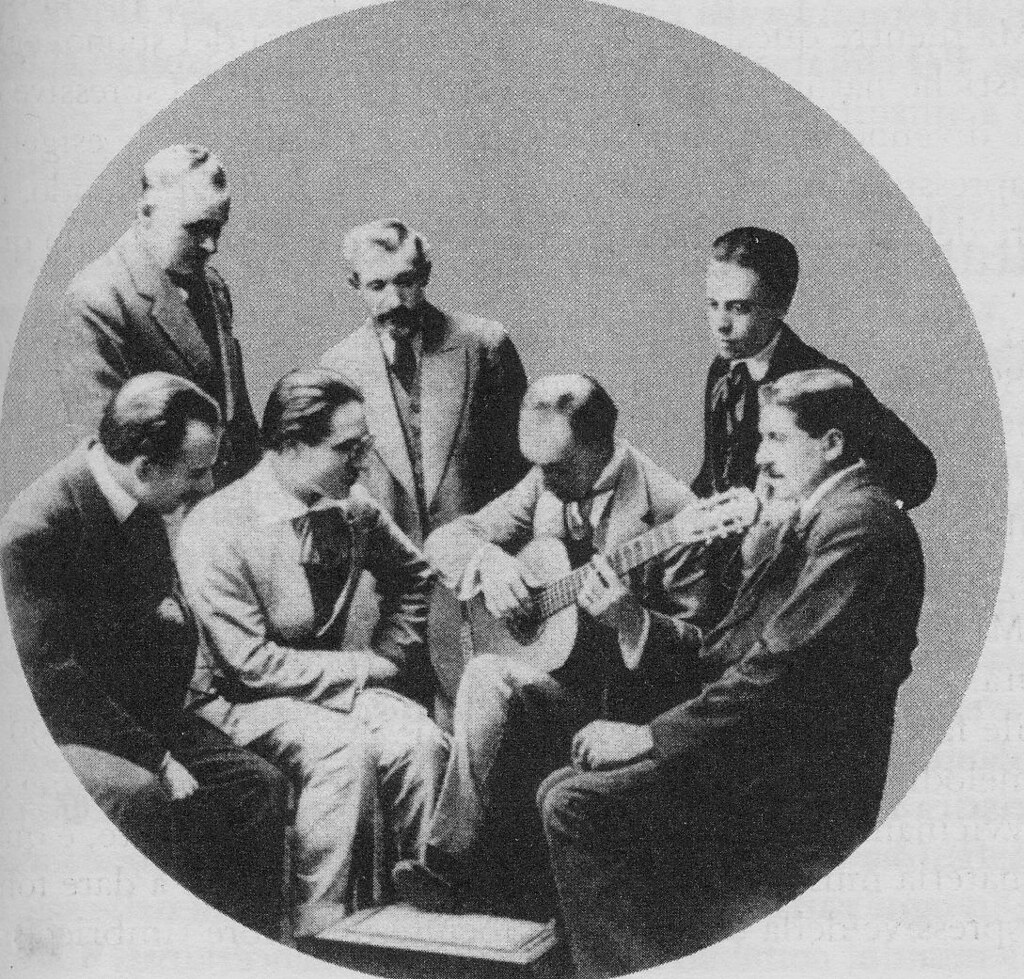
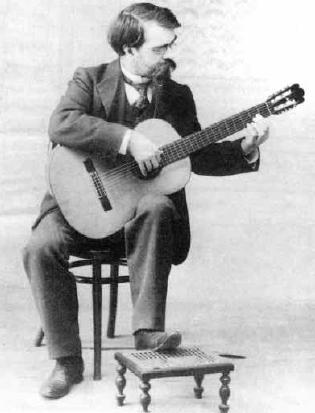
I always dream of playing in a setting just like Tarrega did in the above picture. Everyone up close, paying attention, listening to the nuances. I don’t have to worry about producing volume for a big hall. But I also can’t imagine the pressure with people watching/listening over my shoulders!

(Btw, I don’t play with a foot stool, but I want Tarrega’s foot stool!)

In a similar picture, Llobet was playing (also with an awesome footstool). And Segovia was watching him up close. I wonder if Llobet’s got nervous?

Someday I will fulfill this dream – get a couple friends, all dressed up, and sneak into the 19th century-looking Ranlet Lounge, to recreate the “Tarrega picture” above. I would need get a good looking beard or mustache first though.

#16 Why reggae – episode #1

Back then, HMV in Hong Kong would do a crazy sale every summer. A lot of CDs were around HKD 30 to 40 (USD 4 – 5) a piece (maybe cheaper?) – perfect for a student who didn’t have much spare money.

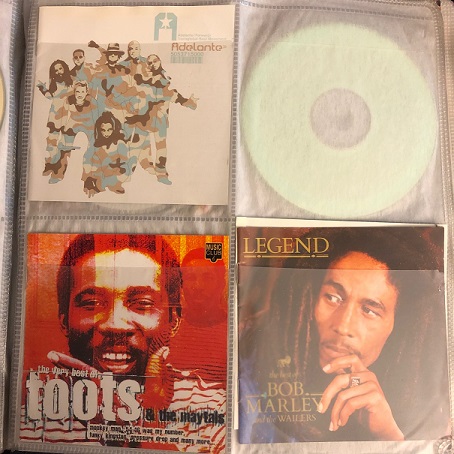
As unexciting as it could be, the Legend by Bob Marley was the first reggae CD I picked up, from a crazy sale, and the guitar solo in No Woman No Cry was one of the solos I learned by repeating the track endlessly. Forward a few years, I was a sophomore at Indiana University Bloomington, and I made a friend in the intermediate guitar class because he heard me playing that solo before class started. Turned out we were both business majors. I don’t even remember his name now, but I recall him being a handsome guy and had a beautiful girlfriend. We didn’t see each again till senior year, and he already had a great job lined up. He is probably very rich now, owns a nice house, kids and everything.

But anyhow, I learned much about Bob Marley. His songs always got nice hooks, and his lyrics are not as difficult to listen to compared to a lot of other English songs. It took me many years to really understand what does “no woman no cry” mean though.

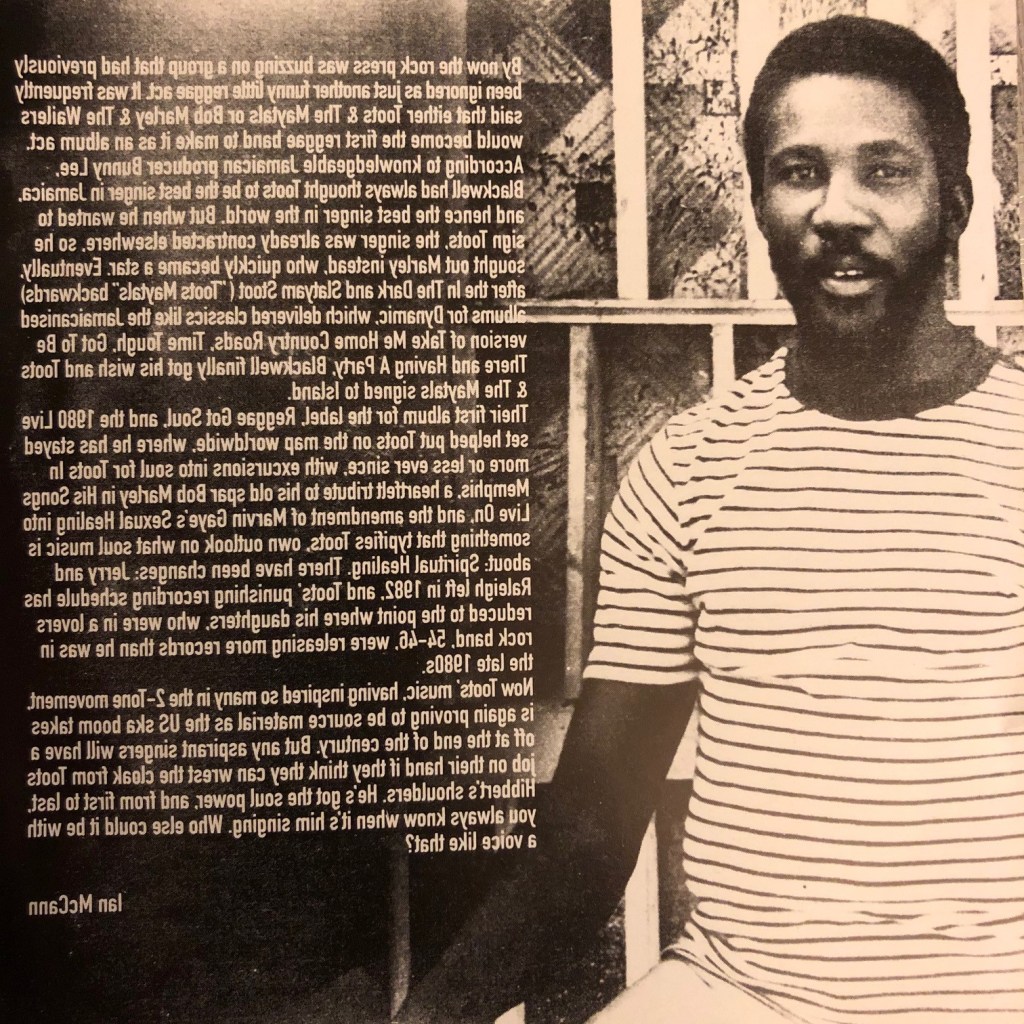
A few summers later, in the TST HMV, I bought the Toots and the Maytals greatest hits CD. A completely different kind of reggae, and so much energy! And who knew I would would have two chances to see him many years later, and even opened for him? (More about seeing Toots in a later post.) The funny thing about the Toots CD is that, the text in the little booklet were printed backwards? Maybe there’s a secret message hidden in there, like the writings of Leonardo Da Vinci?

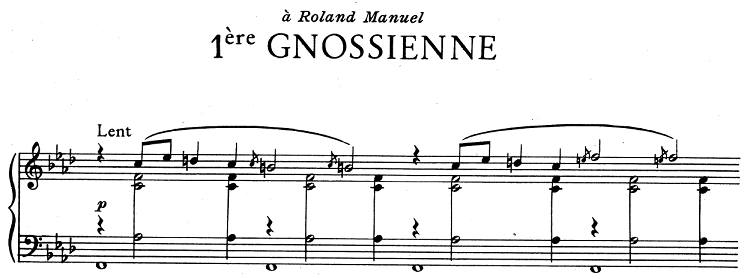
The Adelante / Forward / Transglobal Soul Movement was the last reggae CD I got in Hong Kong before attending school in the US. To be honest, I remember not enjoying it as much. Maybe my reggae soundscape at that point was Marley and Toots, and the Adelante CD was a bit too modern to my taste? But the title track is interesting – a reggae version of Erik Satie’s Gnossienne #1!

These CDs laid the foundation to my never-ending reggae quest.

(Continue on Why reggae – Episode 2)

#15 Valses Poéticos by Enrique Granados

I took piano lessons through my teenage years, but I was a bad student. With much shame to say, I didn’t practice much. Maybe I spent too much time playing basketball? Time seemed to have passed by so quickly, and the next lesson always came before I could find time to practice. My parents would use video game time in exchange for practice time, but apparently that didn’t work.

I did take a few Royal School piano exams. I remember taking the grade 3 exam with my younger brother, back to back on the same day. The passing grade was 100, and my brother passed – he got 100, but I got 99. I must have really annoyed the examiners to fail me by just one point. Or maybe they want to be “encouraging” and let me know I was “so close”. My family always thought my brother and I must have both done poorly, but they have decided to spare the younger one.

Of course, my laziness bites back hard. I became a music major, and eventually a theory teacher, but I am one of the few theory teachers who cannot play the piano. Give me a chord progression, and maybe I can make something up and fuzz my way through. But put a score in front of me, and I would just embarrass myself.

Not having taken piano lessons seriously was one of the biggest regrets of my life. Especially I have learned later that the “father of classical guitar” Francisco Tarrega was also a pianist. Maybe my tremolo would be better had I trained my fingers on the piano more? I tried to compensate and devoted more time in my undergraduate years on the piano, but it just never got better. I have passed the critical period.

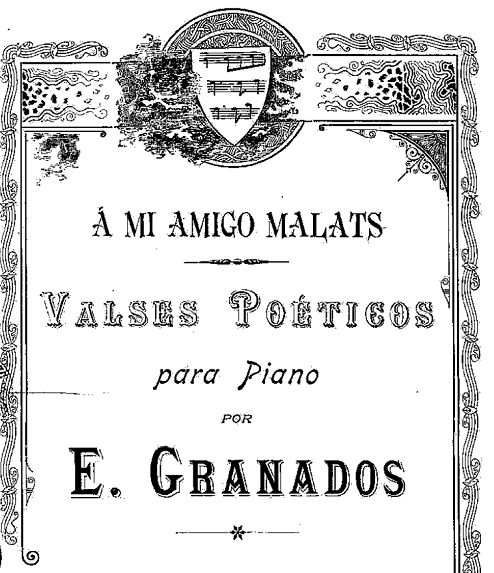
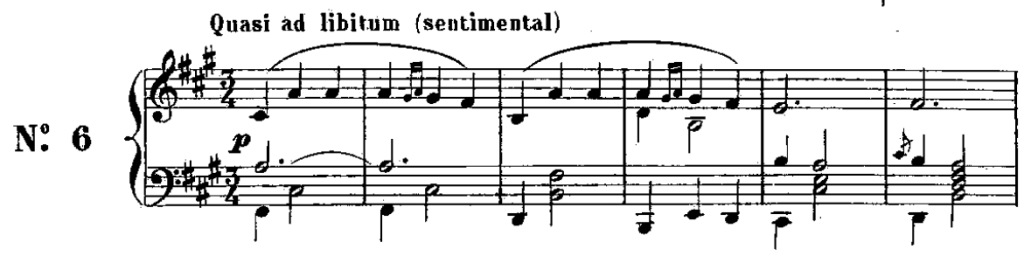
I remember only two pieces from my teenager piano lessons, one of them was waltz #6 from Valses Poeticos by Enrique Granados, and the other was Golliwogg’s Cakewalk by Claude Debussy. I think they were both pieces from the grade 6 piano exam. The whole Valses Poeticos set was a popular piece for classical guitar students at IU, and I remember being surprised to hear waltz #6 played on the guitar. I quickly rekindled my love for waltz #6, and also fell in love with the whole piece. And it was dedicated to Joaquín Malats! I tried to learn the other movements on the piano (you can imagine how it went), and eventually I played the guitar duo version – fulfilling a dream with a little help from my friend Tom Torrisi.

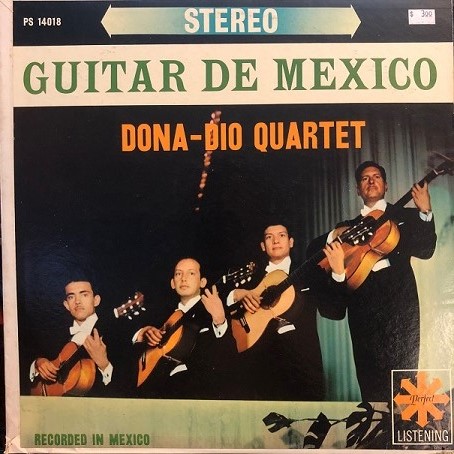
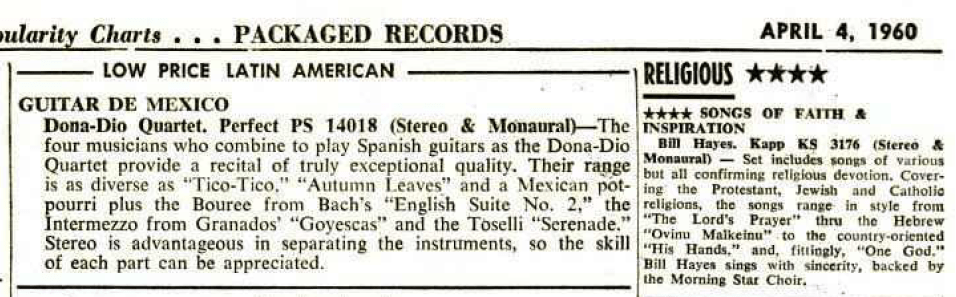
#14 Guitar de Mexico – Dona-Dio Quartet

I love this record. The arrangements are amazing. And a quartet versoin of Recuerdos is just epic… But I couldn’t find much info about the quartet. There’s a short writeup of the album from the 1960’s Billboard:

“Low price Latin American”?!

Apparently, records were categorized by genres, and their potential to sell: “very strong sales potential”, “good sales potential”, “moderate sales potential”, “low price classical”, low price popular”, “low price international”. I have never read an issue of Billboard till this one. Do they still do that?

1960. The Sound of Music was #1. I was skimming through the issue, couldn’t see any classical guitar album… a few flamenco albums are mentioned, such as Flamenco Variations on Three Guitars by Sabicas.

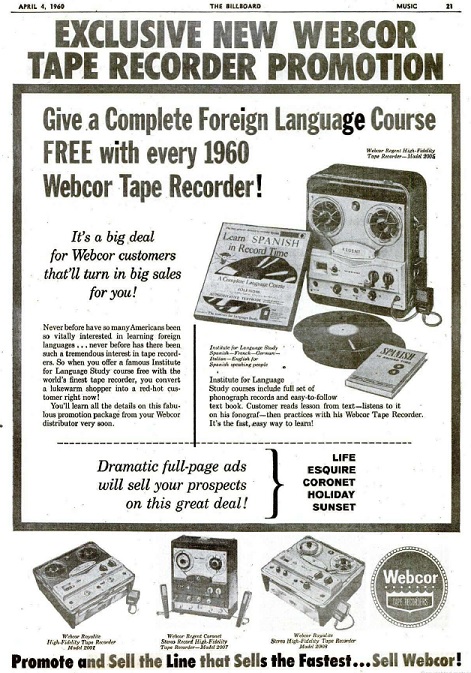
I was surprised to fine the following ad – I have a 4-CD compilation of the Persuasive Percussion. Never realized it came out as early as 1960. I remember playing the CD before a music theory final exam as students were settling in.

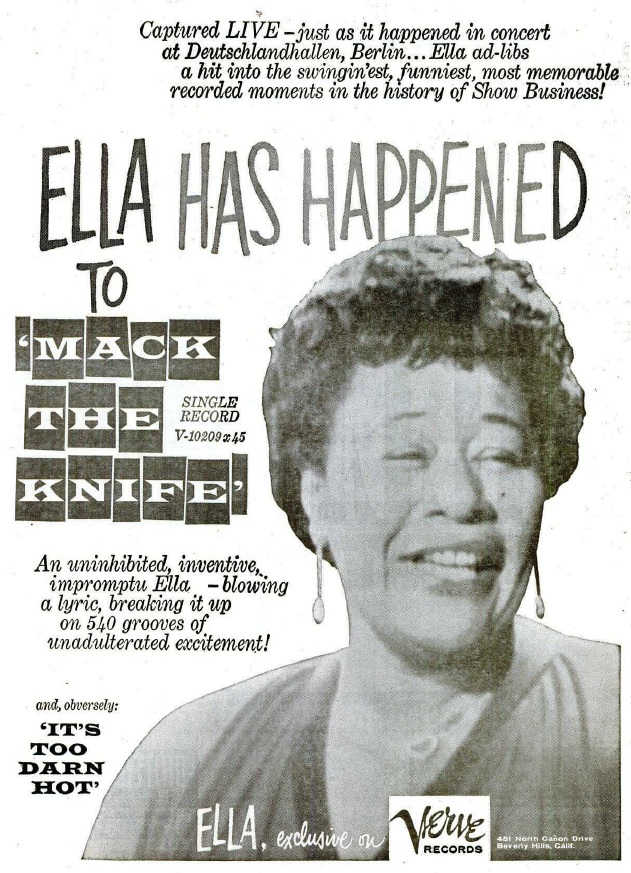
There are many cool advertisements:

#13 Smithsonian Folkways Recordings – a mandolin orchestra from Rochester?

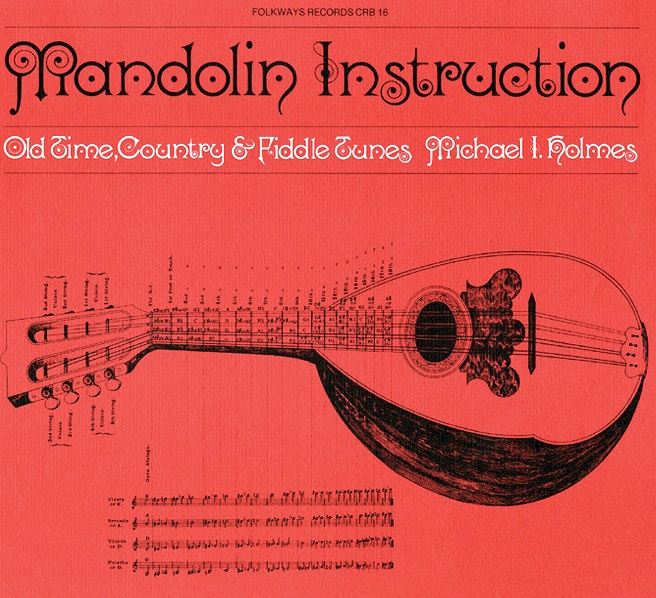
Amongst the instructional vinyls/booklets from the Smithsonian Folkways Recordings, the Mandolin Instruction: Old Time, Country & Fiddle Tunes by Michael Holmes is worth a separate post, because it contains a picture of a mandolin group from Rochester in 1927!

I was told by Mr. John Bernunzio – owner of Bernunzio Uptown Music, that the mandolin was popular in Rochester back in the day, but a google search of “Rochester Mandolin Orchestra” does not yield much. On his blog, John showed a picture of a mandolin orchestra from Rochester ca. 1920 . I tried comparing personnel in John’s picture with the one above… I am not at all good at recognizing faces, and I don’t think they are the same group. What do you think?

The group name “Arabella F. Krug and Orchestra” is also interesting. Why were they not the “Rochester Mandolin Orchestra”? It’s easy to name a group after the town/city one resides in, and I understand it usually comes with good intention: to build something for the community. But, I have heard stories of people resenting groups named after a city/town – do the groups really represent everyone in town?

Anyhow, the Folkways vinyl booklet also contain a lot of pictures of other musical/mandolin groups and advertisements between 1890 to 1927. Pictures of musical groups include:

  • South’s greatest “Old-time string band” from “Old Virginny”
  • Bellson Plectral Orchestra, St. Paul, Minnesota
  • Killgore’s Orchestra, Grand Rapids, Michgan
  • M.E. Sunday School String Orchestra, Galena, Kansas
  • The Lavery Gibson Club, Detriot, Michigan
  • Terrace Garden Quartet, Chicago, Illinois
  • Rybka’s Orchestra, Portland, Oregon
  • Silk City Plectral Sextet, Paterson, New Jersey
  • Gibson Mandolin Club, Hagerstown, Maryland
  • Floreine Mandolin Club, St. Louis, Missouri
  • The Cadenza Mandolin Orchestra, Spokane, Washington
  • The Monroe Brothers and Byron Parker (The Old Hired Hand)
  • Hoyt Ming & the Pepsteppers

John mentioned about taking mandolin lessons from Veda Santos, and kindly lent me a few mandolin method books from Don Santos (Veda’s husband). Naturally, I had to look them up. Not much could be found about Veda other than a few blog posts from John, but a few interesting things came along by looking up Don Santos:

a) he published method books for many instruments – plectrum guitar, tenor banjo, mandolin, Hawaiian guitar, and accordion (by William Turnboo) (could there be more?);

b) a front cover picture on the Crescendo magazine from 1925 that praised him as a sought after teacher and performer;

c) reports from the Music Trade Review on the annual Santos contest for banjos, guitars and mandolin bands in Rochester, with banjo bands, mandolin orchestras, Hawaiian guitar bands, and Spanish guitar bands(!?); and

d) banjo virtuoso Frederick J. Bacon published music through Santos’s publishing company (various footnotes in Fred Bacon’s Wikipedia page).