#12 Smithsonian Folkways Recordings – teach yourself guitar?

Like many, I began playing guitar by teaching myself – thanks to my training in violin, at least the left hand (thought it) knew what to do. That was before the age of the internet, and I spent much time, rewinding videos of my favorite guitarists, trying to learn solos note for note. As Youtube became part of life, much of my non-classical guitar knowledge was acquired through “Youtube University”. But how did people learn guitar on their own back then?

My friend and idol Kinloch Nelson once told me, in the past, if words got out about someone who knows how to play a chord you don’t, you would just go knock on that guy’s door. You get to learn something new, and you make a new friend. The community was small and everyone helped one another.

My relatively new hobby of collecting vinyl revealed yet another way of music instructions. As I was digging through folk records, I came across the album, How to Play the 5-string Banjo by Pete Seeger. Turns out the record came with a small booklet (8 pages), with instructions and sheet music in the tiniest typeset. It discussed fingerings, strumming patterns, meters, musical styles etc., with accompanying tracks.

The record was released by Folkways Records, which has been part of the Smithsonian since 1987. What’s better yet is that today you can find this instructional booklet (and many others) online as a PDF, as the whole Folkways catalog is online.

But I digress. I have not made up my mind yet to learn the banjo. So I spent some time to look for records of guitar instructions, and there are quite a few. I have since then used Ed Badeaux’s American Guitar in my folk guitar class – it has great summary of different styles of guitar playing. Pete Seeger’s 12-String Guitar as Played by Leadbelly seems really intriguing… great excuse to get a 12-string guitar?

#11 Sheet Music by the Pound

Came across the old magazine for banjo, mandolin, and guitar, the Cadenza, Volume 4, #1, 1897, p.12.

“That’s a jolly idea they have in Berlin of selling sheet music by the pound. You go to one of the shops where music is sold in this way and give them a lot of the pieces you want and they select them and lay them in a pile and weigh them out – so many pounds, so many marks and pfennings. Or, if you can afford, say, three pounds of music, you can take one pound of sentimental, one pound of dramatic, twelve ounces of comic, and four ounces of devotional, or any other arrangement that suits your fancy. It is a great boom to the musician who is poor-not to speak of the poor musician-because under this system Wagner and Brahms and Dvorak will cost him no more than the insignificant and forgotten Smithkowski and the deluded and soft-hearted Screwleeski. And Wagner for the piano, of course being bought by the pound, can be played by the pound with good grace. The Listener recommends to our local dealers this system of selling music. – Boston Transcript.”

#9 Tito Livio De Madrazo

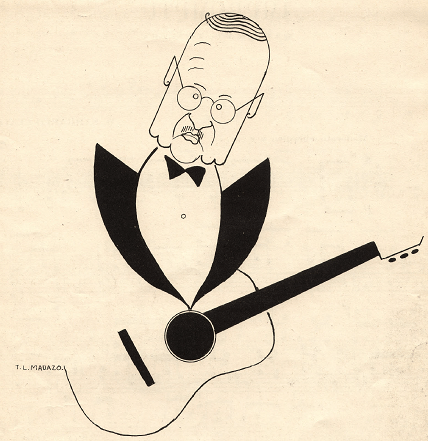
Checking out some guitar music, and I was captured by the above image – the portriat of Manuel Sarrablo y Clavero, by T.L. de Madrazo. The style was so cool!

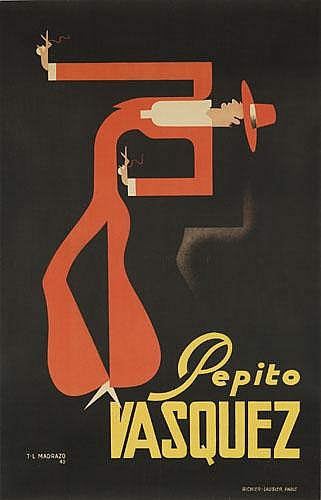
Couldn’t find much on the internet. Tito Livio de Madrazo (1899-1979s) was a Spanish artist, whose works worth a lot. Here is a site with a few of his works. I have included four below (guitar related, of course).

Can anyone please shed some light on the life of T.L. de Madrazo?

#8 How it all started – 3

My brother and I ended up playing the viola in the primary school orchestra. We never took a viola lesson, but our teacher would transpose all music from alto to treble clef so that we can play it like a violin. I remember in a Christmas performance at school, the viola parts didn’t have to come in till later in the piece, but when it came time for the viola entrance, I couldn’t get into playing position quick enough and started late. I still do stupid things like that today.

I did not play in the school orchestra when I entered secondary school (equivalent to grade 7?). I wasn’t really sure why, but it seemed like my violin teacher did not want his students to be involved with the school orchestra. I respected my teacher a lot, so I did what he said. Back then, everyone student who took music lessons would take performance exams through the Royal School of Music, and my teacher was so opposed to the idea that a performance can be quantified in different levels. It certainly made an impact on me, to be careful of numbers of the commercial world. He would play Twinkle Twinkle Little Star in the most musical way, and ask us young students, how would we grade his performance?

My teacher did have a student, whose parents would insist on my teacher helping her achieve grade 8 in two years. She was a beginner. She got grade 8 in two years. She sounded…. bad.

Even though I didn’t join the school orchestra, I continued violin lessons, all the way through age 19, until I came to the States for college. I was quite proud that when I was 15, I played the Presto from Bach’s BWV 1001 for my music exam at school, and my music teacher asked me why wasn’t I in the orchestra. He thought I played so well for my exam. I am glad to not be part of the orchestra though, as I was much more into basketball during those years. I would have a whole different group of friends had I played in the school orchestra. I am also glad I kept my violin lessons too (ended up taking 12 years of lessons), as it paved the way for my mandolin playing.

(To be continued in How it all started – 4.)

#7 How it all started – 2

I played in the school orchesra for 4 years since 8 years old. The first piece I played was the second violin part of the famous Eine Kleine Nachtmusik by Mozart. Along with my choir experience, it showed me how musical parts are being put together to form a whole piece.

Orchestra was really fun, because rehearsals were on Saturday afternoons, and we would play table tennis before/after reherasals and during rehearsal breaks. Primary school back then was split into AM and PM schools, and the two schools would have classes on alternating Saturday mornings. Going to orchestras would allow students between the two schools to mingle. Somehow I didn’t exchange names with the PM kids. We would just play ping pong and hang out every week and never bothered to formally meet each other.

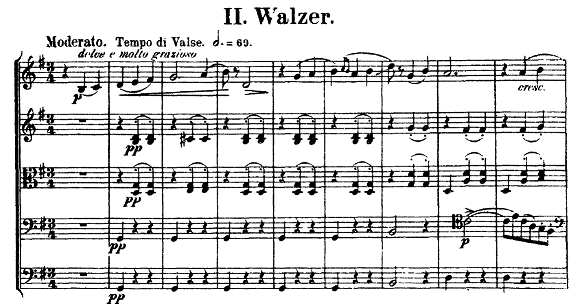
There was a piece I learned from orchestra that I really liked, but the repertoire kept changing, and I ended up forgetting the name of the piece and the composer. I remember the melody very well, and would hum the tune for years before (re)learning its name. It wasn’t until I got to Eastman that I learned it was the second movement of Serenade for Strings by Tchaikovsky. No wonder I never remembered it. “Serenade” and “Tchaikovsky” were very difficult words to spell/remember.

Thinking back, this could be the reason of why I am so obssessed with waltzes. (I can think of two other reasons – the waltz cd, and the video game Antarctic Adventure, but this is worth another post altogether.)

(To be continued in How it all started – 3.)

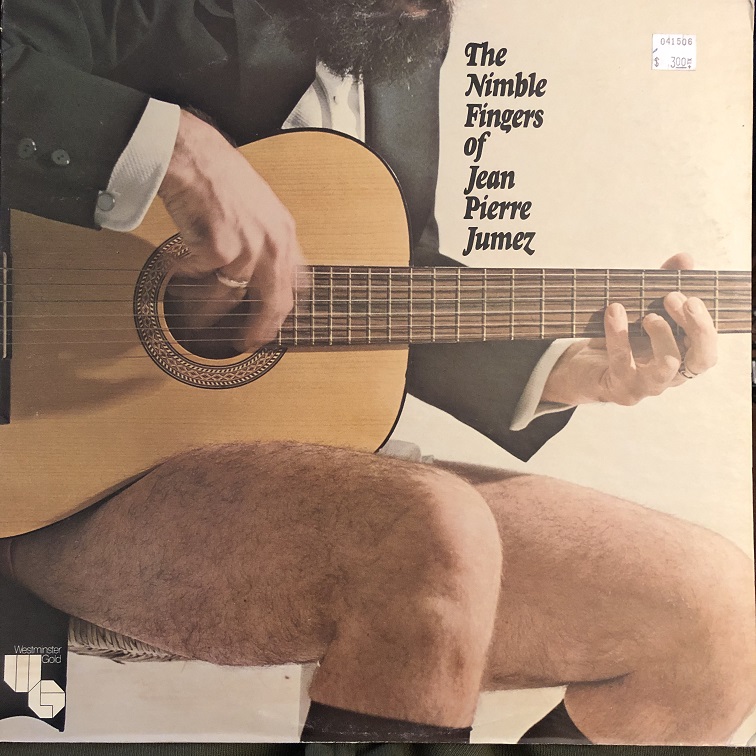
#6 The Nimble Fingers of Jean Pierre Jumez. Spanish Romance

(listening to Paul O’Dette’s live stream as I was writing this)

This obviously belongs to the category of funny album covers, and many have posted about this before. But I did find out quite a lot of fun facts through this album.

1. According to Jumez’s website, “ABC records may have had the rights to distribute the artist’s music, but a New York court ruled that the artist suffered a damage from this very “tasteful” cover. Jean-Pierre Jumez was awarded $ 140,000 in 1975.”

2. Jumez is still putting out new recordings today…! You can find the Fifteen Shades of Guitar on Youtube.

3. He also published a book, detailing his performances around the world. The first few chapters are free to read, and of course, free chapters stopped right where I wanted to read the most – his travels to Hong Kong.

4. Westminster Gold, the label that realeased this record has tons of hilarious record covers. Juliam Bream also has a record on this label (this will be a separate post)

5. The first track of the album is called “Jeux Interdits (anon. arr. Yepes/Jumez)” – which was Spanish Romance with added variations by Jumez. Apparently, as one of the most popular classical guitar tunes, the authorship of the piece led to much controversy

#5 How it all started – 1

My mom told me I asked for piano lessons when I was 4. She told me I was too young, and said I had to wait till 5 to start. She probably thought I would forget, but as it turned (according to her), I asked for piano lessons on my 5th birthday. But lessons didn’t last long, because I didn’t practice.

I was in the school choir between 6 to 10 years old – an experience I am grateful for, because it taught me how to sing harmonies – extremely useful for all the bands I play with. The only song I remember from choir is All Things Bright and Beautiful by John Rutter. I still hum this song from time to time.

I also remember a humiliating experience from a choir practice: in the middle of rehearsal, the teacher was working with one of the sections, and the rest of us were supposed to sit quietly and wait. I was so into the music, and didn’t realize I was whispering my part along. Suddenly, the girl who say next to me glared at me with disdain. My ears turned red, but I couldn’t go anywhere. Looking back, I didn’t know why I felt so embarrassed – was I singing too loud? I sang out of tune? Because I didn’t keep quiet? I guess it was strange I forgot others were around me. What’s worse was I had to sit next to her for the rest of the semester.

My brother signed up for violin lessons when he was 6 (he is one year younger than me). I don’t know how it started, but I remember taking the violin over (not by force), happily playing what he just practiced on. I didn’t know how to read music then, and I was picking up the tunes by ear. Naturally I also signed up violin lessons. I played violin until I came to the States for college at the age of 19.

Much later in life, I have learned that the critical period for acquiring perfect pitch was 6 years old. My brother has perfect pitch, but I don’t, even though we started roughly at the same time – he was 6 and I was 7!

In Elementary training for musicians, Hindemith wrote about his exercises for training perfect pitch:

“… This experiment may at first fail frequently enough, but after eighty or a hundred attempts a fairly firm and reproducible impression of A must be established. If not, the question may be raised whether there is any musical gift at all in a mind that cannot learn to remember and compare pitches…”

Sorry Maestro.

(To be continued on How it all started 2.)

#4 Fluke

fluke2[ flook ]

noun

  1. an accidental advantage; stroke of good luck: He got the job by a fluke.
  2. an accident or chance happening.
  3. an accidentally successful stroke, as in billiards.
  4. what my friends from my teenage years might call me.

(from dictionary.com)

They don’t actually call me “fluke”, but rather, they would call me fluke in Cantonese. So if you want to speak Cantonese, sometimes you just need to break up an English word into separate syllables. For example, fluke would become… “fu look”. The meaning remains, but now it’s Cantonese.

Let me digress: a lot of terms and slangs in Cantonese came from Hong Kong people making an effort speaking an English word. My favorite of these terms is “屙拔甩”. “屙” means defecate, and “拔甩” is blood. So “屙拔甩” is used to describe… a very bad situation.

Anyhow, fluke was my nickname until I came to U.S. for college. It just seemed silly introducing myself to others as “fluke” in college. But I enjoy having a name associated with my childhood/teenage year. Only my dearest friends from home call me fluke now.

But why? What does fluke have to do with me? I actually had no idea about why I was called fluke for at least 10 years. It wasn’t until my early (or mid?) 20s that my dear friend Roger Chung reminded me, he was the one who dubbed my nickname. When I was in primary school, I played a lot of table tennis, and apparently I would always win by making “edge shots”. You could just stand there and be frustrated and helpless.

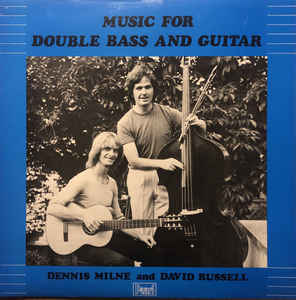
#3 Double Bass and Guitar, David Russell and Dennis Milne

What made David Russell decide to record a guitar/double bass album as his debut in 1978? Why not a solo album?

More info on the album here.

It was my first year in Rochester, and I had a chance to see David Russell up close – he was one of the guests of the guitar festival at Eastman. The other guest was Pepe Romero! Pretty big deal for m, as I had just began my classical guitar studies. I didn’t get to play in any of the master classes, but there are things I learned from those classes that I would still tell my students today. David Russell taught two classes and a total of 8 students. He was tireless and personable. I guess he still is. I would love to meet him in person one day.